
Kira, next to Kira Health Centre, Uganda
info@vanguardlinguistics.com+256 782 187844Alt: +256 701 187844

Professional language services in Uganda & East Africa

Simultaneous Interpretation Services in Uganda

Real-time interpretation for conferences and meetings that must continue without sentence-by-sentence pauses. Vanguard Linguistics supports clients in Kampala, across Uganda and through project-based delivery in Kenya, Tanzania, Rwanda and wider Africa.

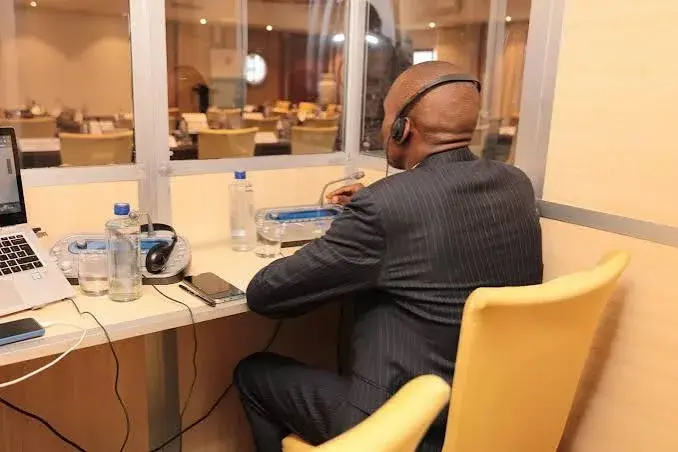
Professional interpreter working from an interpretation booth, illustrating Simultaneous Interpretation Services in Uganda
11Vanguard service

Real-time delivery

Clean audio is part of interpretation quality

Simultaneous interpreters listen, analyse and deliver the message in another language with only a short delay. The mode protects programme flow, but dependable delivery requires skilled teams, clean source audio, appropriate booths or remote systems, advance material and realistic working schedules.

An interpreter cannot reconstruct speech hidden by noise, distance or a broken remote feed. Microphone use, booth position, speaker pace and language-channel testing belong in the language brief.

Understand the service

What is simultaneous interpretation?

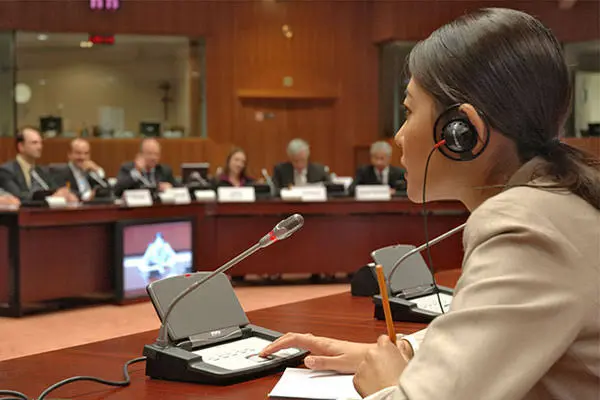
Simultaneous interpretation is the real-time rendering of a speaker’s message into another language while the speaker continues. The interpreter listens, analyses and speaks with only a short delay, usually from a sound-controlled booth or through a remote interpretation platform. Delegates select their language channel on a receiver or connected device and follow the event without sentence-by-sentence pauses.

Vanguard provides simultaneous interpretation planning in Kampala and across Uganda, with project-based coordination for Kenya, Tanzania, Rwanda and East Africa. Commonly requested languages include English, French, Kiswahili, Arabic, Luganda, Runyankole, Acholi, Ateso, Lusoga and other regional or international languages, subject to the exact dates and directions.

Service options

Our Simultaneous Interpretation solutions

The right specification depends on the communication setting, audience and consequence. Each component below is scoped separately and can be combined with related language services.

01

Conference and congress interpretation

Plenaries, panels, government forums and technical sessions continue at their planned pace while multiple audiences listen in their languages.

02

Corporate and institutional events

Product launches, shareholder meetings, leadership forums and training programmes receive a channel plan suited to the room and decision context.

03

Remote simultaneous interpretation

Virtual and hybrid meetings use assigned channels, platform permissions, reliable connections, moderator protocols and a technical rehearsal.

04

Broadcast and streamed sessions

Language feeds can be planned for recorded or live distribution when the production team confirms routing, rights and output requirements.

Plan before production

How to plan a successful simultaneous interpretation project

01

Interpreter team and rotation

Sustained simultaneous interpreting is cognitively intensive. Longer sessions normally require at least two interpreters per active channel, working in planned rotation.

02

Booths and sight lines

A suitable booth reduces distraction and protects sound quality. Interpreters also need to see speakers, presentations and the meeting chair.

03

Microphones and floor feed

Every contribution—including audience questions—must use a microphone. Interpreters cannot accurately render speech they cannot hear.

04

Receivers and channel access

Delegate numbers by language, headset distribution, channel labels, hygiene, spares and return procedures are part of the service design.

Use cases

Common uses of Simultaneous Interpretation

Large plenaries
Policy and technical conferences
Bilingual training
Hybrid meetings
Broadcast or streamed events
Multi-room congresses

Deliverables

What our simultaneous interpretation projects can include

  • Interpreter team by language channel
  • Booth or remote-console plan
  • Prepared terminology and session notes
  • Live language-channel coordination

Uganda and regional expertise

Industries that use Simultaneous Interpretation

Language decisions change with subject matter, professional responsibility and the people who must act on the communication. Vanguard matches the assignment with relevant experience and prepares terminology before delivery.

Government and diplomatic meetings

International development and NGO summits

Corporate conferences and business events

Legal and policy forums

Medical and scientific congresses

Education, training and professional workshops

Prepare well

What we need to quote your simultaneous interpretation project

  1. 1Active and passive language directions
  2. 2Session durations and breaks
  3. 3Names, acronyms and technical terms
  4. 4A microphone for every contribution
Avoidable project risks

Details worth resolving early

!Poor floor audio

!Overlong shifts without rotation

!Untested remote connections

!Late terminology changes

A controlled workflow

Our professional simultaneous interpretation process

01

Assess

Purpose, language, audience, files and risk.

02

Assign

A suitable linguist and workflow are selected.

03

Create

Work is completed against the brief and references.

04

Review

Meaning, terminology, completeness and presentation are checked.

Questions answered

Simultaneous Interpretation: frequently asked questions

What information should I send for a quotation?+

Share the language pair, intended audience, subject, file or event details, deadline and final use. This allows a project-specific assessment.

How is quality checked?+

The workflow is agreed around risk and use, then checks meaning, terminology, completeness, consistency and presentation before delivery.

Can the work be confidential?+

Sensitive material can be handled under project-specific confidentiality arrangements agreed before files are shared.

How many simultaneous interpreters are needed?+

Team size depends on the number of active language channels, language directions, session length, technical complexity and timetable. A full-day channel normally needs a team rather than one person, and parallel rooms require separate coverage.

What equipment is used for simultaneous interpretation?+

A typical on-site system may include booths, consoles, interpreter microphones, a clean floor-audio feed, transmitters, language channels, delegate receivers and headsets. The venue and audience determine the exact setup.

How far in advance should I book simultaneous interpretation?+

Share the material or event brief as early as possible. Lead time depends on the language pair, volume, subject, review level, event date and availability of the right specialists. Urgent requests are assessed honestly rather than accepted at the expense of quality.

How do I request a quotation for simultaneous interpretation?+

Send the source and target languages, intended audience, country or community, files or event programme, quantity, final use, delivery format and deadline. Confidential material can be discussed before a secure transfer method is agreed.

Have a language project in mind?

Tell us the language, purpose and deadline.

Request a quotation
Chat with us